Site Work Done by the Crew That Shows Up
Excavation in Patton for foundations, trenches, and site preparation where scope is confirmed before digging starts
Panczak Dirtworx is an owner-operated excavation company serving Patton and the surrounding Cambria County area, where the crew doing the estimate is the same crew that runs the equipment on your property. Excavation is the core of what this business does—foundations, trenches, utility cuts, and general site work—handled by the owner's own team rather than subcontracted out. That direct arrangement means the person who walked your site and confirmed the dig depth, access route, and spoil removal plan is accountable for how the finished grade looks when the equipment leaves.
Every job starts with a free site visit and estimate, during which the crew assesses what the ground will require before a number is put on paper. Rural and semi-rural parcels in this part of Cambria County often include older farmstead lots where access is limited by grade changes or mature tree lines, and those conditions affect equipment selection and how spoil gets staged. The estimate covers scope, access, and what clearing or material disposal is included, so there are no assumptions on either side once work begins.
Arrange a site visit to confirm what your excavation requires and get a written scope before any digging starts.
How Excavation Work Is Done Correctly
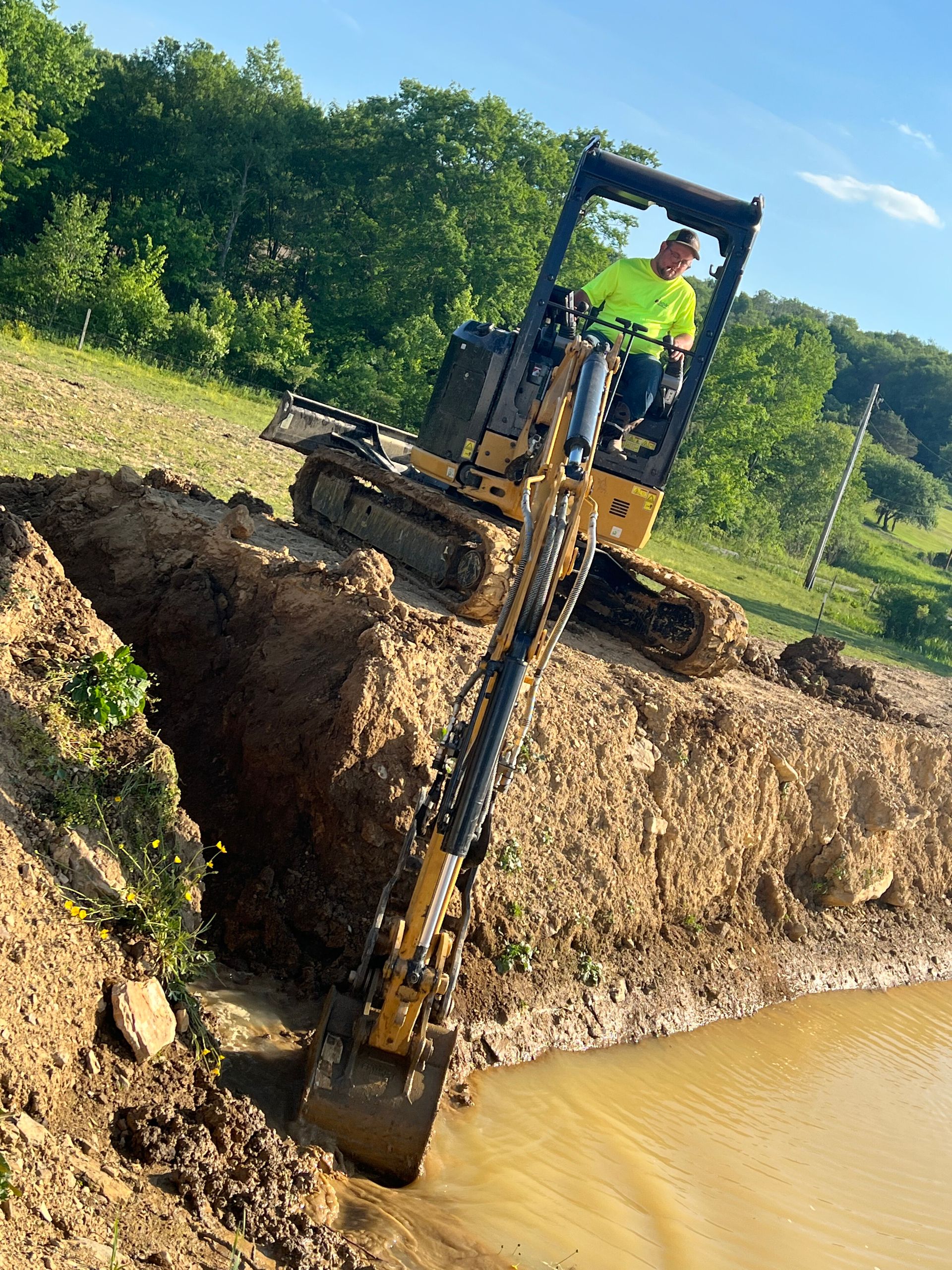
Excavation for a footing or basement is not simply digging to a target depth—it involves confirming bearing conditions, maintaining consistent sidewall angles to prevent slough-in, and leaving the bottom at the elevation and grade the concrete or drainage work needs to land on. On trench work, the sequence matters: utilities need to be located before any bucket touches soil, and the trench must be cut to the width and depth the pipe or conduit specification calls for, not just to what is convenient. Panczak Dirtworx follows that sequencing on every job because cutting corners in the dig creates problems downstream for whoever pours, lays pipe, or backfills.
When the work is finished, what you see is a cut that holds its lines, spoil staged or removed as agreed, and a surface grade ready for the next trade or for final seeding. On foundation digs specifically, the bottom should be flat, at consistent elevation, and free of loose material that would cause settlement. Those are the observable markers that the excavation was done to spec rather than just done fast.
On older rural properties, existing buried features—dry wells, cisterns, old tile lines—do not always show on any record and occasionally surface mid-dig. Because the owner is on site rather than managing from an office, decisions about how to handle unexpected conditions get made in the field without a delay chain running back through a dispatcher.
What Property Owners Ask About the Work
These questions address how excavation is scoped, sequenced, and completed on properties in and around Patton, where site conditions on older rural and farmstead lots can affect how the job is planned from the start.
What happens during the site visit before excavation begins?
The crew walks the access route, confirms where equipment will stage and where spoil will go, and identifies any grade changes or obstacles that affect how the dig gets sequenced. That visit is what makes the written estimate accurate rather than approximate.
How does the condition of the existing ground change the excavation approach?
On compacted fill or heavily rooted ground, additional time and equipment may be needed to reach undisturbed soil at the required depth. On sloped parcels common to older farmstead properties in Cambria County, sidewall management becomes more critical to prevent collapse during the dig.
Why does spoil removal matter and what should the estimate specify?
Excavated material adds up quickly, and unless the quote explicitly states where spoil goes—on-site stockpile, spread on the lot, or hauled away—those details become disputes after the fact. Confirming disposal in writing before work starts prevents that.
What does properly finished excavation look like before concrete or pipe work begins?
The bottom should be at a consistent, verified elevation with no loose or disturbed material remaining, sidewalls should be cut at safe angles without visible cracking or slough, and the access trench or pit should be clear of debris that would interfere with the next phase of work.
How is access to the dig site evaluated for equipment?
The operator looks at overhead clearance, ground bearing capacity along the approach path, and turning radius at the work face. Properties with soft shoulders, low-hanging lines, or narrow lane access may require a different machine size or a modified approach route to avoid damage to the property during entry and exit.
Panczak Dirtworx also performs excavation in Ebensburg, Carrolltown, Loretto, and Hastings. To get a written scope and estimate for your excavation project, call (814) 505-8448 and describe the site and what you need dug.