Silted or Eroded Ponds Restored to Working Capacity
Pond repair in Patton for stock ponds and farm ponds that have lost depth, developed bank erosion, or started leaking through a damaged dam
What a functioning pond looks like after a repair is concrete: the water holds, the bank holds its line, and the outlet moves water at the right level without washing more material out each time it flows. Panczak Dirtworx is the crew that produces that result on rural and farm properties in Patton, handling the excavation and earthwork needed to restore a pond that has lost capacity or begun to fail. The owner's crew does the physical work with their own equipment, and every repair starts with a free on-site assessment of the damage before any scope is committed.
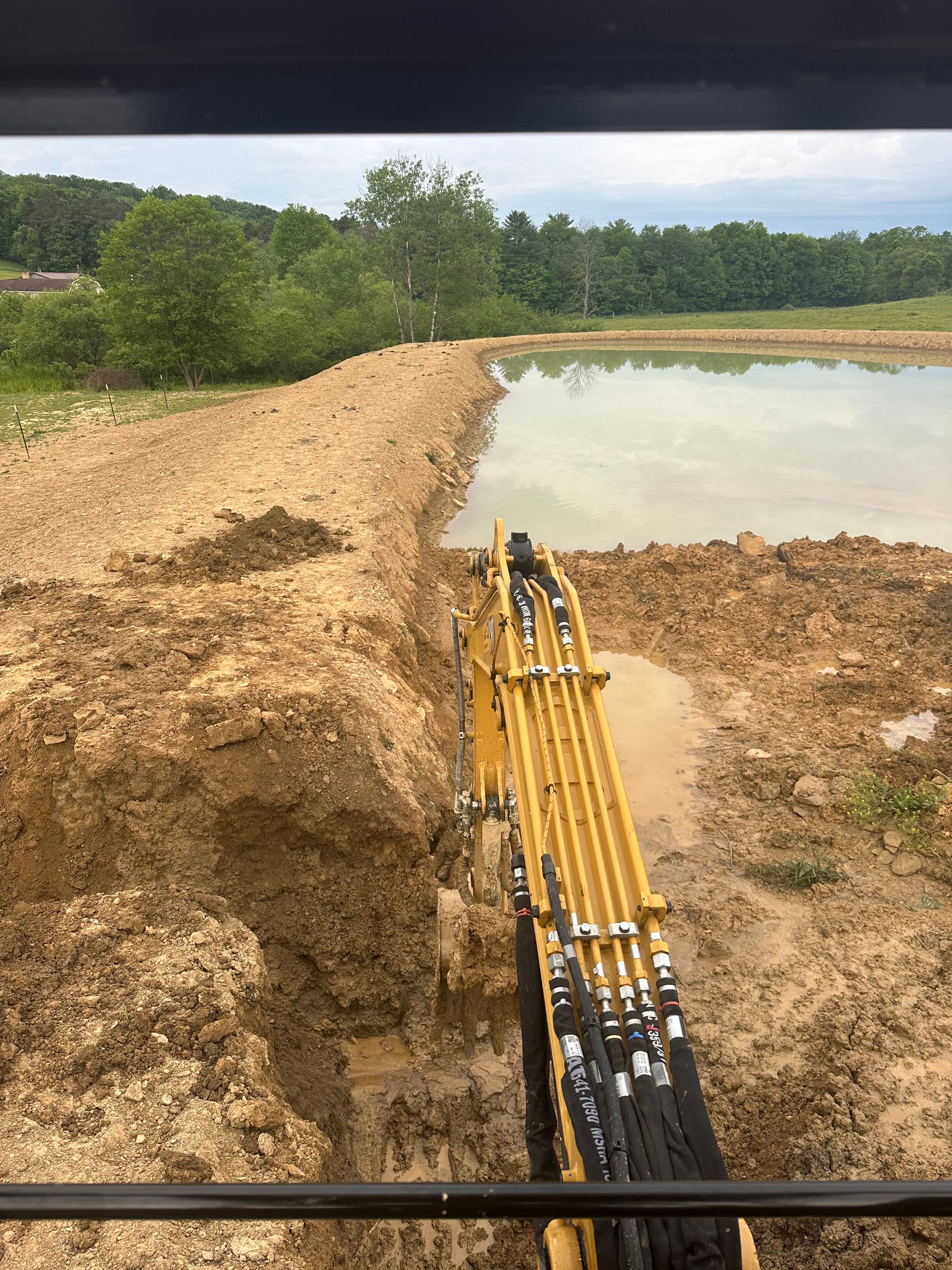
Pond repair on older rural parcels in this area typically involves a combination of excavating accumulated silt from the basin, rebuilding eroded or slumped banks, and restoring or replacing the outlet structure that controls the water level and prevents the dam from overtopping. The sequence matters: the basin cannot be properly shaped until silt is removed, and the outlet cannot be set correctly until the basin geometry is established. Each of those steps requires excavation equipment operated by a crew that understands how the finished pond needs to drain and retain water, not just how to move dirt.
Schedule an on-site visit so Panczak Dirtworx can assess the current condition of the pond and outline what the repair scope involves.
How Pond Earthwork Addresses Specific Failure Conditions
Pond failure on older farm parcels in Patton usually traces back to one of three conditions: silt buildup that has progressively reduced basin depth over decades until the pond no longer holds adequate volume, bank erosion that has destabilized the dam structure and allowed water to find a path through or around the earthen wall, or an outlet pipe or spillway that has deteriorated and can no longer control the water level properly. Identifying which condition—or which combination—is present determines what the repair actually requires.
After the repair is finished, the visible changes are straightforward: the water surface sits at the correct level, the banks are stable and show no active erosion, and the outlet functions without the kind of seepage or bypass flow that indicates a compromised dam. A pond that was losing water or filling with sediment returns to a state where it can hold stock, support wildlife, or simply function as it was originally built to function on the property.
Not every pond repair is the same scope. A pond that needs silt removed and banks reshaped is a different job from one where the dam itself has to be rebuilt with compacted fill, and those distinctions affect both what the crew does and how the work is sequenced. The estimate covers what is included in the agreed repair scope, which is why the on-site assessment happens before any number is committed.
What to Know Before a Pond Repair Begins
The questions below reflect what landowners in this area typically need to understand before undertaking a pond repair on a rural or farm property.
How is the extent of silt buildup assessed before the repair is scoped?
During the on-site estimate, the depth of accumulated sediment is evaluated across the basin to determine how much material needs to be excavated and where the original basin profile was, which establishes the target for reshaping the pond floor.
What does rebuilding an eroded dam section involve?
Rebuilding a slumped or eroded dam requires excavating the failed section back to stable material, compacting fill in lifts to restore the dam profile, and ensuring the repaired section ties into the adjacent earthwork so no new weak point is left where water can work its way through.
When does an outlet pipe need to be replaced rather than repaired during a pond restoration?
If the pipe has collapsed, shifted out of alignment, or corroded to the point that it can no longer pass the design flow without leaking around the barrel, replacement is the correct approach rather than patching, since a failing outlet is one of the primary ways a pond dam begins to erode from the inside.
How do older farm pond designs in Patton typically differ from newer constructed ponds?
Many ponds built on homestead and farm parcels in this part of the state were constructed with hand equipment or early dozers and may have shallower basins, less precisely shaped spillways, and earthen dams without the compaction documentation that modern constructed ponds carry—meaning the repair crew has to assess what was actually built, not assume a standard profile.
What maintenance prevents a repaired pond from silting back in over time?
Managing the watershed above the pond—keeping disturbed ground seeded and vegetated, limiting bare soil near the inlet, and maintaining a vegetated buffer along the banks—does more to extend the life of a repaired pond than any single structural measure.
Panczak Dirtworx also performs pond repair in Ebensburg, Carrolltown, Loretto, and Hastings. To get started, set up a free on-site estimate with Panczak Dirtworx and walk the pond together before any repair decisions are made.