Ground Prepared So Construction Can Start Clean
Site prep in Patton for rural and semi-rural lots that need clearing, grading, and pad preparation before a home, shop, or outbuilding can be placed
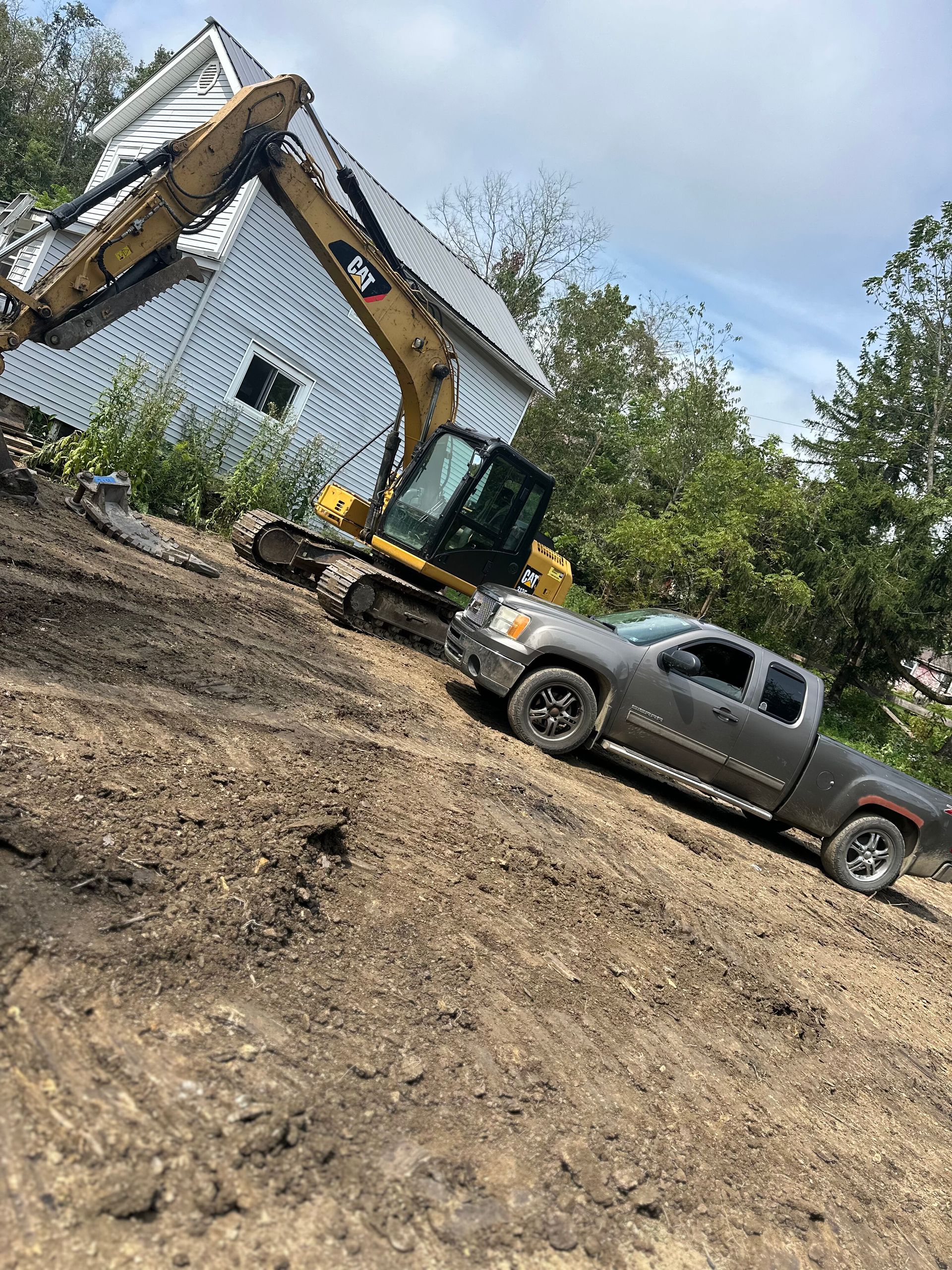
Preparing a raw lot for construction involves a sequence of work that most people only see the end of: a flat, stable surface where a builder can begin. Panczak Dirtworx handles that sequence on rural and semi-rural properties in Patton, clearing the existing vegetation, cutting and filling to the target grade, and leaving the pad or access in the condition the builder needs to proceed. The owner's crew does the work with their own equipment, and every project starts with a free on-site estimate to define exactly what the preparation involves before any machine time is committed.
On rural lots in this part of the state, site prep commonly involves more than stripping sod and pushing dirt flat. Many parcels carry mature trees, stumps, old fence lines, or variable topography that all have to be addressed before a usable building pad can be established. The crew clears what needs to come out, then cuts high spots and fills low areas to reach the planned elevation—a process that requires reading the existing contours of the lot and understanding where the finished surface needs to land relative to drainage and the building footprint. Scope and inclusions are confirmed in the estimate before work starts, so the builder arriving afterward knows what condition to expect.
Set up a free on-site estimate to walk the lot and define the preparation scope before construction scheduling begins.
What Proper Site Preparation Requires
Site preparation is the work that determines whether everything built on top of it performs correctly or begins correcting problems from day one. The pad has to be at the right elevation, stable enough to carry the structure's load without settling, and graded so water moves away from the building rather than toward it. On sloped rural lots, achieving that often means cutting into the high side, filling the low side with compacted material, and ensuring the transition between cut and fill is handled so the pad does not shift after the load goes on it.
When site prep is completed correctly, the builder steps onto a surface that is level within the tolerances the foundation requires, clear of any vegetation or debris that would interfere with layout, and accessible by the equipment and vehicles that need to reach the site. The absence of problems at that point is the measure of the prep work—nothing has to be undone or redone before construction moves forward.
What is included in site prep varies by project. Some jobs require only clearing and rough grading; others involve establishing temporary access, managing topsoil separately from subgrade material, or coordinating the pad elevation with a septic or utilities layout. Those distinctions are part of the on-site estimate conversation so the scope reflects the actual project rather than a generic description.
Common Questions About Site Prep Work
Site preparation questions often come from property owners who are new to raw-lot development and need to understand how the groundwork phase connects to what the builder does next.
What is the difference between rough grading and finish grading during site prep?
Rough grading establishes the general elevation and removes major high-and-low variation across the lot, while finish grading brings the surface to a precise, smooth grade ready for a slab, footings, or a base course—most site prep projects involve rough grading, with finish grading tied to the specific tolerance the builder requires.
How does the crew handle topsoil during site preparation?
On projects where the existing topsoil has value for later seeding or landscaping, it is typically stripped and stockpiled separately from the subgrade work so it can be respread after construction rather than buried under fill.
Why does a sloped lot in Patton require more planning before site prep begins?
Lots with significant grade change require the crew to calculate cut and fill volumes before work starts so the finished pad sits at the right elevation without excess material left over or a shortage that forces hauling fill in—that calculation is part of the on-site estimate review.
What has to happen before concrete or footings can be placed after site prep is complete?
The prepared pad needs to be compacted to the bearing capacity the foundation design requires, and any soft spots or organic material that turns up during grading have to be removed and replaced with stable fill before the concrete contractor arrives.
How does access to a rural lot affect how site prep is sequenced?
If the property does not have a usable driveway or access point, establishing a temporary haul road or clearing the entry may be the first step before the building pad can be worked—that sequencing is identified during the on-site walk and reflected in the estimate.
Panczak Dirtworx also performs site prep in Ebensburg, Carrolltown, Loretto, and Hastings. To move forward, connect with Panczak Dirtworx to arrange an on-site visit and receive a free estimate outlining the preparation work your specific lot requires.