Brush and Overgrowth Reduced Without Hauling Debris
Forestry mulching in Patton for overgrown fields and wooded edges where clearing the ground without heavy disturbance is the priority
Older rural parcels in Patton that have sat idle for years develop thick brush lines, invasive growth along field edges, and wooded strips that crowd out pasture or block access. Panczak Dirtworx operates mulching equipment that processes this material in a single pass, shredding brush and small trees down to ground-level mulch that stays on site rather than being hauled away. The owner's crew does the work directly, and every job begins with a free on-site estimate to assess the growth type and terrain before the equipment is brought in.
The mulching process differs from conventional clearing in one critical way: the ground surface is not scraped or significantly disturbed. The mulching head works above the soil, which means root systems and topsoil structure remain largely intact after the pass. For landowners reclaiming an overgrown field on former homestead or farm ground, that matters because the ground does not need to be rebuilt before it can be used again—the mulched material decomposes in place and the surface is immediately accessible. Any larger stumps or debris that cannot be processed by the mulching equipment are identified and discussed before the job starts, not discovered as surprises mid-job.
Arrange an on-site estimate to review the growth density and terrain and confirm whether mulching is the right fit for your parcel.
Why the Method Matters for Reclaimed Farm Ground
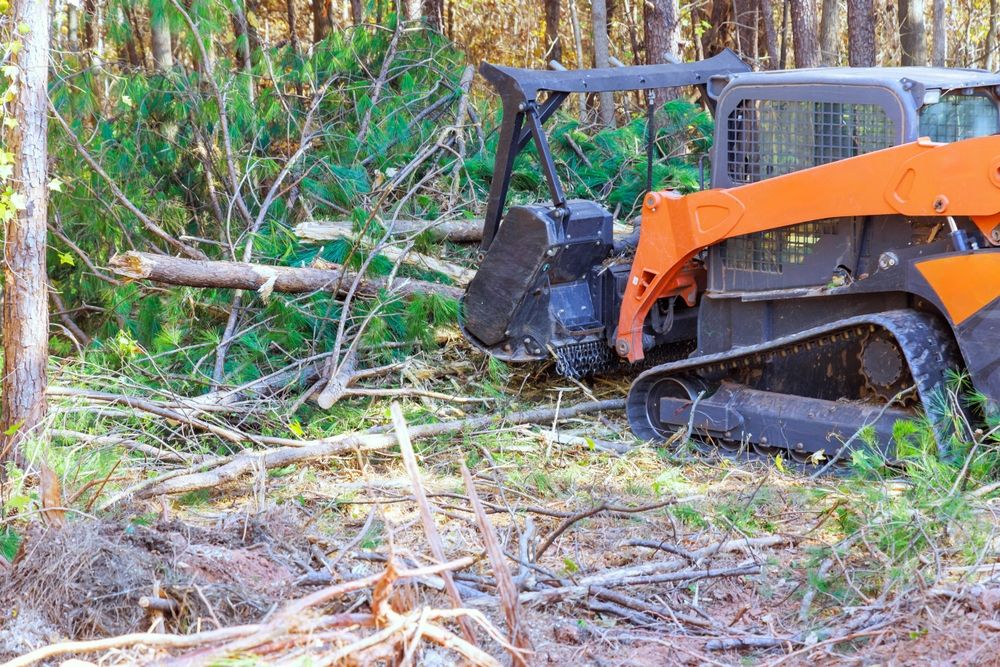
The mulching equipment used for this work processes material as it moves through the area, reducing brush and small-diameter trees to shredded organic matter in a continuous motion rather than in separate felling, piling, and hauling steps. That single-pass efficiency is one reason mulching is well-suited to field edges and overgrown strips where the objective is reclamation rather than a cleared surface ready for construction. The machine reads the terrain as the operator works, adjusting to grade changes and growth variation across the lot.
When the mulching pass is finished, the treated area changes from impassable brush to open, mulched ground that can be walked, fenced, mowed, or left to regenerate depending on what the landowner intends. The debris that would have required a loader and truck to move is now processed material lying flat on the surface. That is the visible, immediate change from this type of work—access and usability where there was none before, without the ground looking like a construction zone.
Mulching works best on brush and trees up to a certain stem diameter; larger mature trees or heavy timber typically require conventional felling before mulching equipment can process the remaining growth. Knowing that boundary going into the estimate prevents scope mismatches and allows the crew to plan for any supplemental work that needs to happen alongside the mulching pass.
Answers About How Forestry Mulching Is Done
The following questions come up regularly when landowners are
evaluating mulching for overgrown rural parcels, particularly on older farm and homestead ground where the growth has had years to establish.
How does the mulching equipment move through dense brush without getting stuck?
The machines used for forestry mulching are purpose-built for this work, with tracked undercarriages that handle soft or uneven terrain and cutting heads designed to process material at ground level without requiring the area to be accessible first.
What size trees can be mulched versus what needs to be cut separately?
Forestry mulching equipment handles brush and trees within a certain diameter range—typically smaller-diameter growth—and anything above that threshold needs to be felled and moved before the mulching pass begins, which is identified during the on-site estimate so the scope is accurate.
Why does mulching leave less surface disruption than conventional clearing?
Because the cutting head processes material above the soil surface rather than grubbing it out, the topsoil and root structure beneath are not turned over during the mulching pass, which keeps the ground stable and avoids the erosion and settling that can follow a full grub-out on a sloped rural parcel.
What does the ground look like immediately after mulching is completed?
The treated area will show shredded woody material lying across the surface where the brush stood—the growth is gone, the ground is passable, and the mulch layer will begin breaking down over the following months without any additional handling required.
How does terrain slope affect where mulching equipment can operate on a rural parcel?
Steeper or wet sections of a lot may limit where tracked equipment can safely maneuver, and those constraints are assessed during the on-site walk so the estimate reflects only what the machine can safely reach.
Panczak Dirtworx also performs forestry mulching in Ebensburg, Carrolltown, Loretto, and Hastings. Contact Panczak Dirtworx to set up a free on-site estimate and discuss the specific growth conditions on your property before committing to an approach.