Uneven Ground Shaped for Drainage and Construction
Grading in Patton for older farm and homestead parcels where washed-out or irregular ground needs to be reshaped before new work can go in
Panczak Dirtworx grades and levels land across Patton and the surrounding area, handling the machine work with the owner's own crew rather than routing jobs through a subcontractor. The work covers building pads, driveways, yard areas, and any ground that needs to be cut or filled to reach a stable, functional finish grade. Rural and semi-rural lots with uneven or eroded surfaces—particularly older farm parcels where the ground has shifted or washed over years of use—are a common starting point, and every job opens with a free on-site estimate that reviews the existing contours and establishes what the finished surface needs to accomplish.
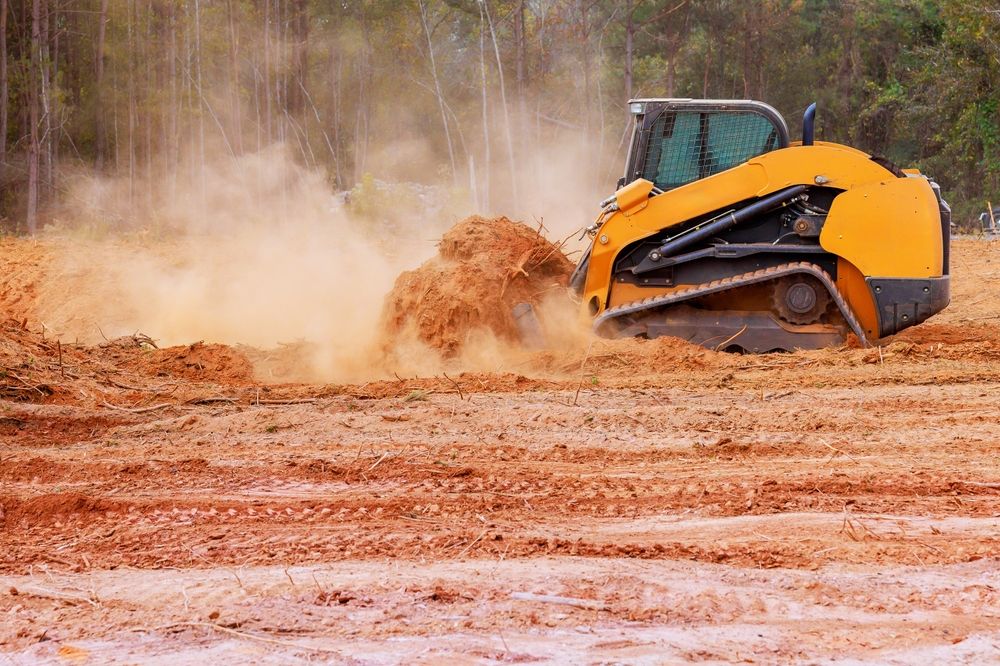
Grading involves cutting high areas down and filling low areas to reach a target elevation, then smoothing and compacting the surface. The sequence starts with reading the existing ground: where the high points are, where water is pooling or running, and what elevation the finished surface needs to reach relative to any structure, driveway, or drainage outlet it has to work with. On older parcels in this area where regrading has not been done in decades, the crew often finds grade variation that has developed gradually—low spots that have held water and softened, eroded channels where runoff has cut into the surface, and high spots left by old fence rows or filled areas that were never properly compacted. All of that affects how the cut-and-fill calculation is made before work starts.
Request a free on-site estimate to review the existing grade and confirm what the finished surface needs to accomplish for your project.
The Difference Between a Grade That Drains and One That Doesn't
Grading work that is done correctly establishes a surface that sheds water toward an intended outlet—a ditch, a swale, or simply an open area away from a building or driveway. The grade does not need to be steep to do this; it needs to be consistent. A small, uniform slope across the finished surface is what prevents water from finding a low spot and sitting there. Panczak Dirtworx has completed grading projects exceeding $10,000 in scope since opening, and the owner's direct involvement in each job means the grade is checked against the target rather than handed off to an unsupervised operator.
After grading is finished, the changes you can observe on the ground are specific: the surface is visually even, there are no obvious depressions where water will pool, and a driveway or building pad sits at the elevation it was designed for. On a yard or access area, water moves across the surface and away from structures rather than toward them. That functional outcome—water going where it is supposed to go—is the measurable result of accurate grade work, and it is what separates a properly graded surface from one that was just pushed flat without checking the fall.
The grading scope confirmed in the estimate specifies what is included—whether that is a finished building pad, a rough driveway grade, or a yard reshaped around an existing structure. Work outside that scope, such as installing drainage pipe or seeding the finished surface, is identified separately so the estimate reflects exactly what the crew is contracted to deliver.
What Property Owners Ask About Grading Work
The following questions address how grading decisions are made and what the finished work looks like, particularly on older rural parcels where the ground has had time to develop irregular surfaces and erosion patterns.
How does the crew determine where the finished grade needs to be before cutting begins?
The on-site estimate includes reviewing the target elevation for the surface—whether that is set by a building's finished floor, a road tie-in, or a drainage outlet—and that elevation drives every cut-and-fill decision made during the job so the finished surface lands where it needs to.
What causes a regraded surface to wash or rut after the work is done?
A surface left without seeding or stabilization in areas of concentrated flow will erode under rainfall regardless of how accurately it was graded, which is why the crew identifies high-risk areas during the job and the estimate discusses whether seeding or erosion matting is part of the scope or handled separately.
How does grading a driveway differ from grading a building pad?
A driveway grade follows a linear path and is typically crowned or cross-sloped to shed water to the edges, while a building pad requires a level or near-level surface at a specific elevation with drainage falling away from all sides—they use the same equipment but require different grade targets and checking methods.
Why do older farm parcels near Hastings and Ebensburg often need more fill material than expected when regrading?
Years of erosion and settling on farm ground that has seen vehicle traffic, livestock, and seasonal disturbance leave a surface profile that may appear even but actually has substantial low areas when checked against a target elevation, requiring fill volume that a visual inspection would not reveal.
How is compaction handled after fill is placed during a grading project?
Fill material placed to raise a low area needs to be compacted in layers rather than pushed in as a single lift, because uncompacted fill settles unevenly after load is applied—whether that load is a vehicle on a driveway or a footing on a building pad—and compaction is the step that prevents that settling from creating a new problem after the work is complete.
Panczak Dirtworx also performs grading in Ebensburg, Carrolltown, Loretto, and Hastings. To get started, reach out to Panczak Dirtworx directly to schedule a free on-site estimate and walk the property before any grading scope is finalized.